
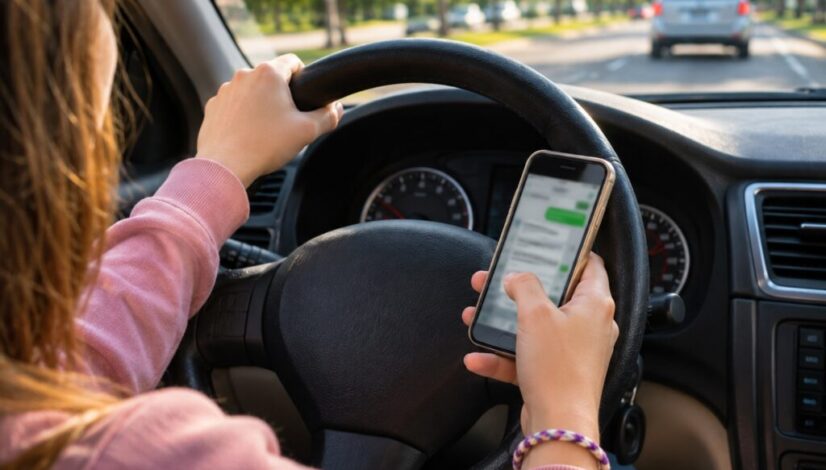
Texting and Driving: A Dangerous Distraction That Can Cost Lives
Why Every Driver Should Put Their Phone Away and Focus on the Road
Texting and driving remains one of the most dangerous and preventable behaviors on America’s roadways. A quick glance at a message might seem harmless, but even a few seconds of distraction can have devastating consequences.
For teenage drivers who are still developing their driving skills, the risks are particularly concerning. Understanding the dangers of distracted driving is an essential part of becoming a safe, responsible driver.
The Latest Distracted Driving Statistics
According to the National Highway Traffic Safety Administration (NHTSA), distracted driving continues to contribute to thousands of preventable deaths and injuries annually.
The agency’s Distracted Driving in 2024 report reveals:
- 3,208 people were killed in crashes involving distracted drivers in 2024.
- 315,167 people were estimated to have been injured in distracted-driving crashes during 2024.
- 8% of fatal traffic crashes involved distracted drivers in 2024.
- 639 pedestrians, cyclists, and other nonoccupants lost their lives in crashes involving distracted drivers.
These statistics include multiple forms of driver distraction, not just texting. Because distractions are not always identifiable after a crash, the actual impact may be greater than reported.
Why Texting Behind the Wheel Is So Dangerous
Texting and driving combines three dangerous types of distraction:
- Visual distraction: Taking your eyes off the road to read a message.
- Manual distraction: Removing a hand from the steering wheel to operate your phone.
- Cognitive distraction: Thinking about a conversation instead of concentrating on driving.
According to NHTSA’s distracted driving safety guidance, reading or sending a text typically takes your eyes off the road for approximately five seconds.
At 55 mph, that’s equivalent to traveling the length of a football field without watching where you’re going.
During those seconds, another vehicle could brake suddenly, a pedestrian could enter the roadway, or traffic conditions could change unexpectedly.
Teenage Drivers Face Additional Risks
Teenagers are particularly vulnerable because they have less experience recognizing hazards and responding to unexpected situations.
The Centers for Disease Control and Prevention (CDC) reported that 46% of surveyed high school students who had driven during the previous 30 days admitted to texting or emailing while driving in 2025.
This concerning statistic demonstrates why distracted-driving education should begin before teenagers receive their driver’s licenses.
Parents can help by discussing the consequences of distracted driving, establishing clear expectations, and demonstrating responsible behavior behind the wheel. Professional behind-the-wheel driving lessons can also help teenagers develop safer habits and improve their awareness of potential road hazards.
Is Texting and Driving Illegal in North Carolina?
Yes. Texting while driving is illegal in North Carolina.
The North Carolina Department of Transportation (NCDOT) provides information about distracted-driving laws and the dangers of using mobile devices while operating a vehicle.
North Carolina also restricts drivers under 18 from using mobile phones while operating moving vehicles, subject to specific legal exceptions outlined in North Carolina General Statute § 20-137.3.
These restrictions help protect inexperienced drivers and encourage safer driving habits.
However, following the law should be only part of the motivation. Avoiding phone distractions protects passengers, pedestrians, cyclists, and everyone sharing the road.
Five Ways to Prevent Texting and Driving
Developing safer habits before starting your vehicle can significantly reduce distractions. Learning additional safe driving tips can also help new drivers recognize dangerous situations and make better decisions behind the wheel.
- Silence your phone. Activate Do Not Disturb or driving mode before leaving.
- Keep your phone out of reach. Store it somewhere you won’t be tempted to check notifications.
- Set navigation before driving. Enter your destination and review directions before moving.
- Pull over safely. If a message requires attention, park in a safe location before responding.
- Lead by example. Parents and experienced drivers should demonstrate distraction-free driving whenever teenagers are present.
Safe Driving Starts With Good Decisions
Texting and driving is a preventable risk that no driver should take. A message can wait, but the consequences of looking away from the road can last a lifetime.
At Carolina Driving School, we believe developing safe driving habits is just as important as learning vehicle control and traffic laws. Our driving lessons help students build confidence, improve road awareness, and develop responsible driving habits.
We proudly provide professional driving instruction for students throughout Waxhaw, Monroe, Indian Trail, Union County, Charlotte, and surrounding North Carolina communities.
Ready to become a safer, more confident driver? Explore our driving classes or contact Carolina Driving School at 704-291-0518 to learn more about our driving lessons and driver education programs.